A Review by ZENtheRapper 04/27/25
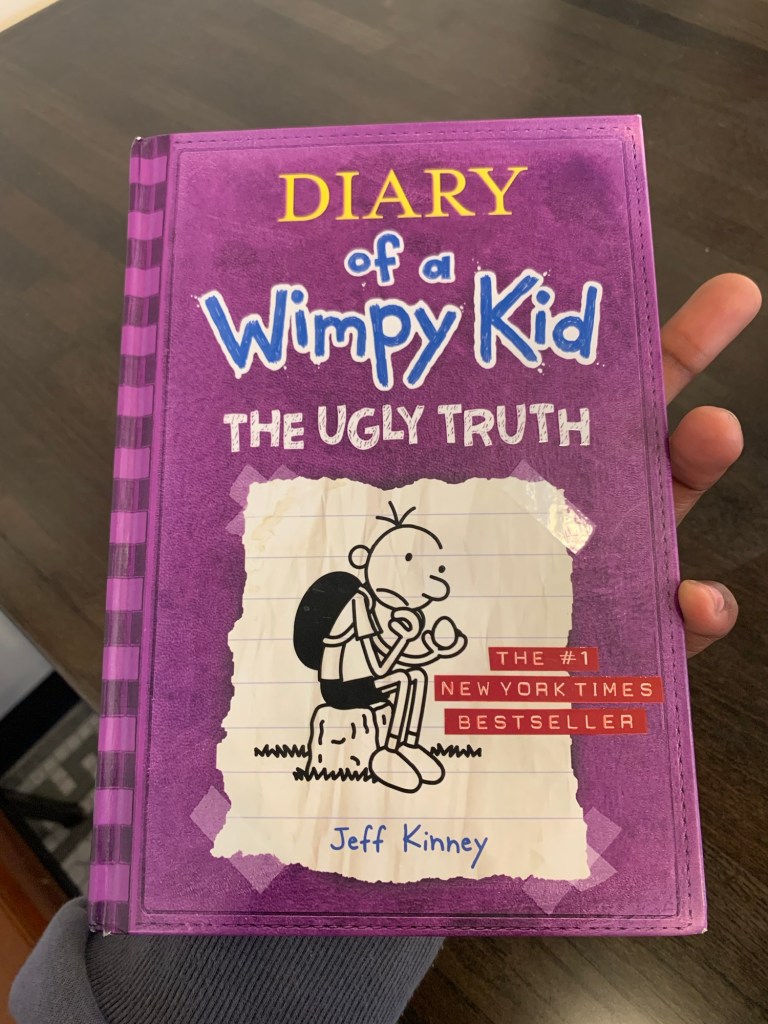
This lighthearted children’s book, written by Jeff Kinney, tells a story about a middle school boy dealing with a universal struggle in his own way: the tension of wanting to stay a kid while also wanting to grow up that exists at the liminal edge of puberty. I loved Diary of a Wimpy Kid books as a child, and this was a refreshing read for me as a 27 year-old rapper and middle school ELA teacher.
This story is mostly told through journal entries where Greg reflects on the constellation of relationships he finds himself navigating, among his friends, family, and community members. Some of Greg Heffley’s friends (or former friends, as it were) are slower to mature, while others are maturing faster than him. Greg sees himself as “the normal one:” the standard of childness, of humanness to compare every other exceptional or dorky kid against. Meanwhile most of the adults in this book (most of them being Greg’s family members) are portrayed in someway as foolish or faulty. The way Jeff Kinney draws Greg seems to reflect this character’s distorting self-perception — a distortion that views self as normal and everyone else as wrong or weird somehow — and it seems to represent the way we all tend to hold a strong self-bias of normalcy for ourselves.
At some points in the narrative, he wants to reap the benefits that come with growing up — being invited to chaperone-less parties with girls, and being generally seen as clever and capable — while at other points, he dreads the responsibility and the lack of ease that growing up seems to bring. Of course this is all extremely normal, and this book shines in how it lays out these dilemmas for us to clearly see and identify with. At 27, I wish my mom still did my laundry, and I wish my dentist still gave me candy. I also still find myself to be ambitious and longing for access to the later-life accolades that come with my age’s version of growing up.
And ultimately, Greg does want to grow up — he is sustained by a belief that all will eventually work out for him and he will become rich and famous some day. He has the benefit of having a younger brother to look back on reflectively and an older brother to look forward, mostly repulsively, to. He views his older family members with all sorts of harsh judgements, hoping to figure out how to create himself into who he wants to become, mostly by avoiding the received wisdom of all of these available examples. All the while, with his future bleak and boogered and four-times divorced, Greg is a resolute American Dreamer, believing that he can defy the odds of his observations.
He is a young American Dreamer, who is fighting the natural tendency towards disillusion that going through puberty in middle school can engender in anyone. He seems to respect his mother and grandmother compared to all the other adults in his life.
And “The Ugly Truth” in this story, is that problematic p-word: puberty. This book shows Hiffley’s struggles with it as a seemingly prototypical young boy, which most young boys probably view themselves as, and which lends this story to being a helpful guide for kids crossing that fateful threshold into adolescence and young adulthood. Kids can read this to help themselves understand their confusing situation by identifying with this everykid as he journals his way to affluent understanding in a veritable ocean of bad advice and poor examples.
Maybe that’s the secret reason I liked these books when I was a kid. Maybe I identified with his instinct to rely on his own cleverness to imagine a successful life for himself, despite the bleak outlook provided by the examples of his weird and wacky family members. As a middle schooler, I thought I liked them because of the fun doodles. But Greg — as “normal” as he may view himself — is an outcast in his world, and that seems to help him hold out hope for happiness in the end.
Ultimately, anybody can relate to this story, even us old foggies who may have forgotten what it’s like to go through puberty, because this tale is about CHANGE, which is pervasive and universal in this world, puberty just being an exaggerated example. And although Greg’s world seems super uncertain and prone to constant change, he seems to be doing OK dealing with the change as it comes, compared to less “normal” examples. I’m not sure if he will become rich and famous, but I think he’ll do just fine with life, even if he turns out looking like Uncle Terrence. Which is to say, I think I will turn out fine… or maybe it’s to say that I think my 7th graders will turn out fine. At whatever symbolic level my adult brain wants to analyze this character and story, I really enjoyed revisiting this series that brought me so much joy in my childhood.
Thank you for reading.
ZENtheRapper
 ZEN Gardens
Leave a comment